Almost no one regrets a paw print or a fur clipping. Many people regret not asking for one. That window closes the moment the body leaves your home.
Here is the short version, because grief makes long reading hard: when your dog dies, you have a little more time than you think, and a few decisions that cannot be undone. In the first hours, gently position and cool the body, decide between burial and cremation, and — before anything is transported — ask for the keepsakes you will want for the rest of your life. Everything else can wait a day.
What to do when your dog dies is, above all, a question about sequence. The decisions are not complicated, but they arrive in a fog, often at night, often alone. This guide walks the first 48 hours in order, with real costs and plain language, so you can move through them without later wishing you had known.
What to do when your dog dies, in the first hour
You do not have to act in the first minute. Sit with them if you need to. When you are ready, three small acts of care come first.
- Confirm and note the time. A pet who has died will not blink, breathe, or respond; the eyes usually stay open. If there is any doubt, or if death was sudden, call your veterinarian or a 24-hour emergency clinic — they can confirm over the phone and tell you what to do next.
- Position the body gently. Rigor mortis — the stiffening of the joints — begins within about 10 minutes to three hours. Before it sets in, ease your dog into a curled, sleeping position. It makes everything that follows easier and kinder.
- Protect against fluids. At death the body often releases urine, waste, or fluid from the mouth. Wear disposable gloves, place a towel underneath, and clean gently around the mouth and rear. Wash your hands well afterward. This is normal and not a sign anything went wrong.
If you have children or other pets in the house, let them be present if they want to. Animals often understand more from sniffing a body than from any explanation, and a calm goodbye helps. If you are unsure how to talk to a child about it, our guide on how to tell a child their dog died walks through the words gently.
How long can you keep a dog's body at home?
Longer than most people assume — which is the point. You do not have to make every decision tonight.
In a cool room, below about 65°F (18°C), a dog's body keeps safely for 12 to 24 hours. Wrap the body snugly in a blanket or towel, then place it inside a large plastic bag. Tucking sealed ice packs or bags of frozen vegetables around the torso slows things further and can extend the window to roughly 48 hours. Keep the room cool and the body out of direct sun.
This buffer matters. It is enough time to sleep, to call a few crematories in daylight, to let a partner drive home, to let the children say goodbye. The most common regret is not a wrong choice — it is a rushed one.
Burial or cremation: how to decide
There are two real paths, plus a few newer ones. Choose by what you can manage, where you live, and what will comfort you later.
Home or backyard burial is legal in most U.S. states but governed by county and municipal rules on depth, distance from water, and pet size; some areas prohibit it outright. If you choose it, bury deep — generally at least three feet — away from water lines and vegetable gardens. It is the most personal option and the least flexible if you move.
Cremation is the most common choice today: fewer legal restrictions, and it works for any living situation. It comes in three forms, and the difference is whether you get your dog's ashes back.
| Aftercare option | Typical cost | Do you get ashes back? |
|---|---|---|
| Communal cremation | $50–$200 | No — multiple pets together |
| Individual / partitioned | Between communal and private | Yes, with a small chance of trace mixing |
| Private cremation | $150–$450 | Yes, your dog only |
| Pet-cemetery burial | $400–$2,000+ | N/A (plot + marker) |
| Backyard burial | Free–low | N/A |
Aquamation (water-based cremation) and green burial exist and are gentler on the environment, but availability is still patchy. If either matters to you, ask local providers directly.
Cremation does not have to happen immediately — but the body does need to reach the facility within the home-keeping window above. When choosing a crematory, look for members of the International Association of Pet Cemeteries and Crematories (IAOPCC), who agree to a published code of ethics. If cost is a barrier, ask local humane societies, veterinary schools, or nonprofit services about sliding-scale prices or payment plans.
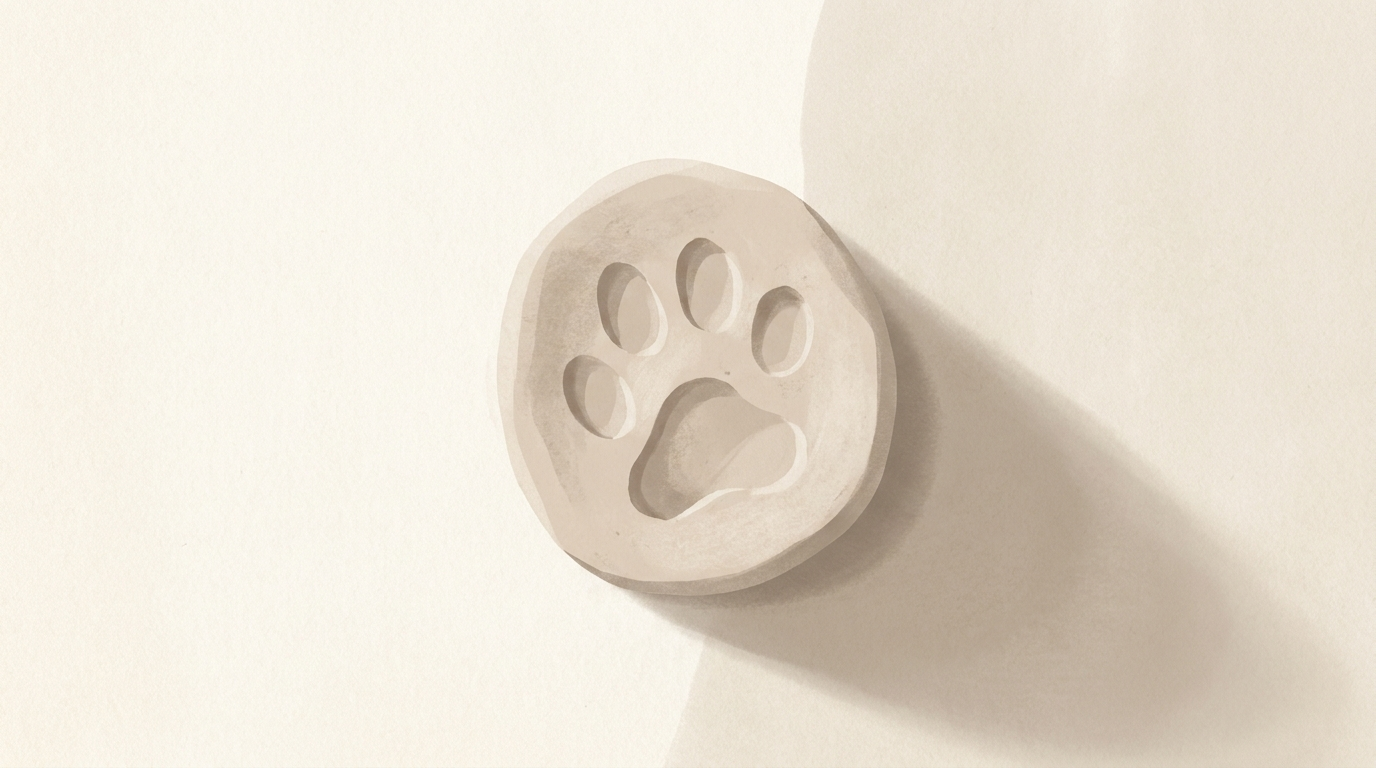
The keepsake window: the one decision you cannot redo
This is the part this guide exists for, and the part most checklists bury at the bottom.
Almost no one regrets a paw print or a fur clipping. Many people regret not asking for one. Once the body leaves your home or the clinic, that window closes for good. Before transport, while you still can, gather:
- A clay or ink paw print — most crematories and many vets will make one if you ask; you can also do it yourself with air-dry clay.
- A small clipping of fur, sealed in a tiny bag or locket.
- A final photograph, if you feel able. You do not have to look at it now. You may want it in a year.
- A note of the details you will forget — the exact weight of them against you, the smell of their ears, the sound of their tags.
These cost almost nothing and are impossible to recreate. Make the ask even if part of you flinches at it. Future-you is the one making the request.
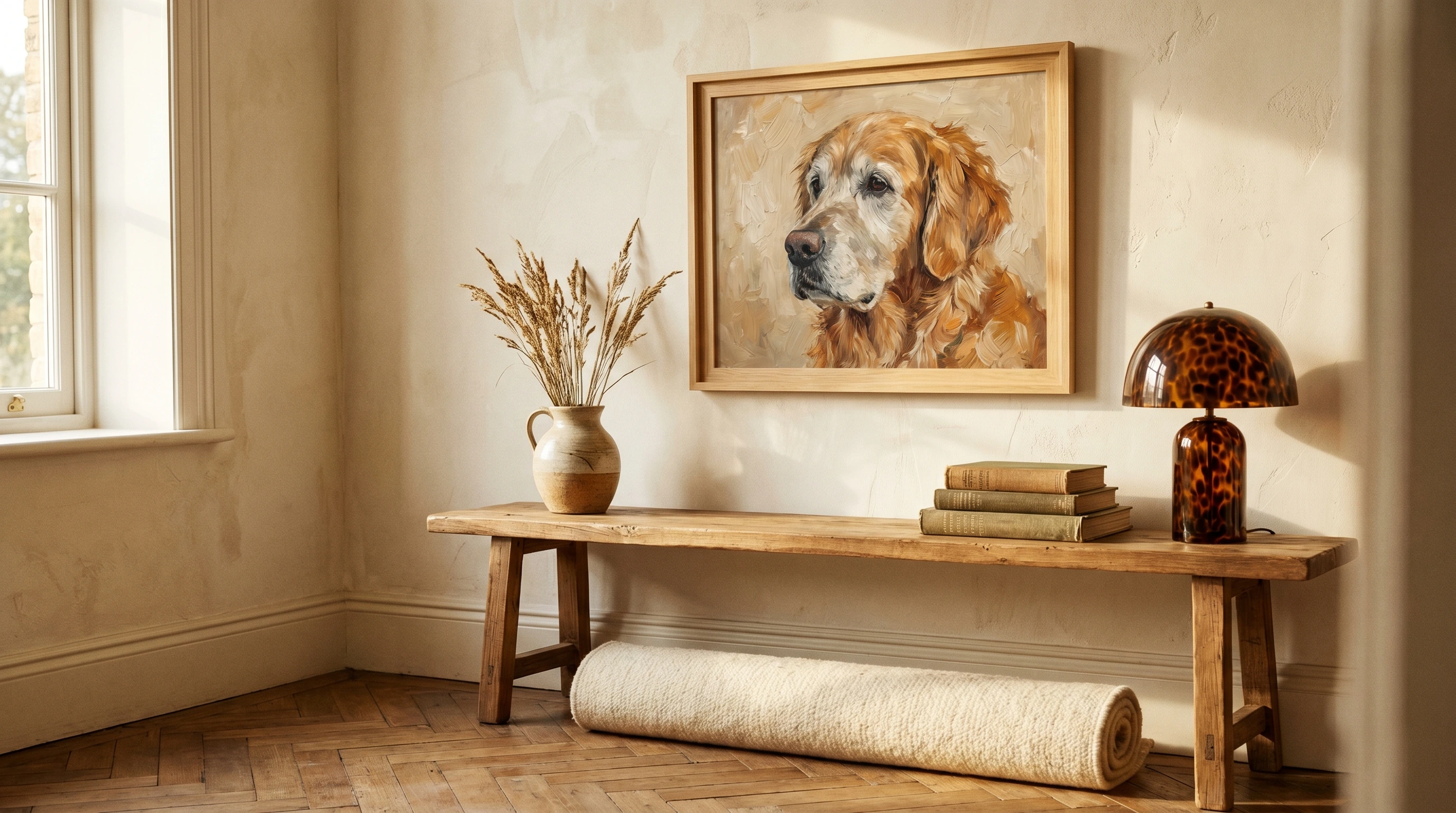
In the weeks after, many families turn one of these — a favorite photo, the shape of a face — into something lasting on the wall. That is the quiet logic behind a hand-finished custom pet portrait: it converts a phone photo, the kind you have hundreds of and will soon stop adding to, into a single object worth keeping. If you want ideas beyond an urn, our piece on dog memorial ideas that aren't an urn collects ten quiet ones.
Hours 24 to 48: the practical aftermath
Once the body is cared for, a short administrative tail remains. None of it is urgent, but handling it in one sitting spares you small ambushes of grief later.
- Cancel or pause recurring orders: food subscriptions, monthly medications, the grooming appointment, pet insurance.
- Update the microchip registry and license so you are not called for a wellness check or renewal.
- Tell the people who will ask — the dog walker, the neighbor your dog greeted, the vet's office (who often send a card).
- Put the bowls and bed away when you are ready, not before. There is no schedule for this.
Tips and reminders
- You have ~24–48 hours with a cooled body. Do not let anyone rush you.
- Get keepsakes before transport — paw print, fur, final photo. This is irreversible.
- Private cremation = your dog's ashes; communal = none returned. Confirm which you are buying, in writing.
- Verify backyard-burial rules with your county before you dig.
- Grief is not a project to finish. The logistics end in two days; the missing does not, and is not supposed to.
If the loss is still ahead of you rather than behind — a diagnosis, a decline — the dread you are feeling has a name, and our piece on anticipatory grief may help you carry it. And if you are simply looking for the words to mark what just happened, start with the things you can do to remember a dog.
Frequently asked questions
How long can you keep a dog's body at home before cremation?
About 12 to 24 hours in a cool room below 65°F (18°C). Wrapping the body in a blanket inside a plastic bag with ice packs around the torso can extend this to roughly 48 hours. Keep the body cool and out of direct sun, and arrange transport to a crematory or burial within that window.
How much does it cost to cremate a dog?
Communal cremation typically runs $50–$200, while private cremation — where you receive only your own dog's ashes — usually costs $150–$450 depending on your dog's size and your region. Individual or partitioned cremation falls in between. Ask whether the urn and a paw print are included or billed separately.
Can I bury my dog in my backyard?
In most U.S. states, yes, but rules on depth, distance from water, and pet size vary by county and some municipalities prohibit it. Bury at least three feet deep, away from water lines and gardens. Check your local ordinances first, especially if you rent or may move.
What keepsakes should I ask for before my dog's body is taken?
A clay or ink paw print, a small clipping of fur, and a final photograph are the three most-wished-for keepsakes. Most vets and crematories will make a paw print if you ask. Request them before the body is transported — once it leaves, the opportunity cannot be recreated.
What should I do first when my dog dies at home?
Confirm the death and note the time, then gently position the body in a curled sleeping pose before rigor mortis sets in (about 10 minutes to three hours). Wear gloves, place a towel underneath, and clean any released fluids. Then take your time deciding on aftercare — you have hours, not minutes.