Euphemisms feel softer to the adult saying them. To a child, "put to sleep" can turn bedtime itself into something to fear.
For most children, the family dog is not their first pet. It is their first death.
Before a grandparent, before a classmate's tragedy on the news, there is the quiet morning when the dog who slept at the foot of the bed is suddenly, permanently gone. How you explain that morning matters more than most parents realize. Handled with honesty, it can become a child's first lesson that loss is survivable. Handled with euphemism, it can plant a fear that takes years to undo.
This is a guide to that conversation — what to say, what to avoid, and how to tailor it to a three-year-old, a nine-year-old, and a teenager, because each hears the word "died" differently.
The short version: what to say when a pet dies
Tell the truth, simply, and use the real words. Say "died" and "death," not "put to sleep," "went away," or "lost." Explain that the dog's body stopped working and will not start again, that it doesn't hurt anymore, and that nothing the child did or felt caused it. Then let them grieve at their own speed, give them a concrete role in saying goodbye, and watch — without rushing — for how the sadness moves through them in the weeks after.
Everything below is an expansion of those few sentences.
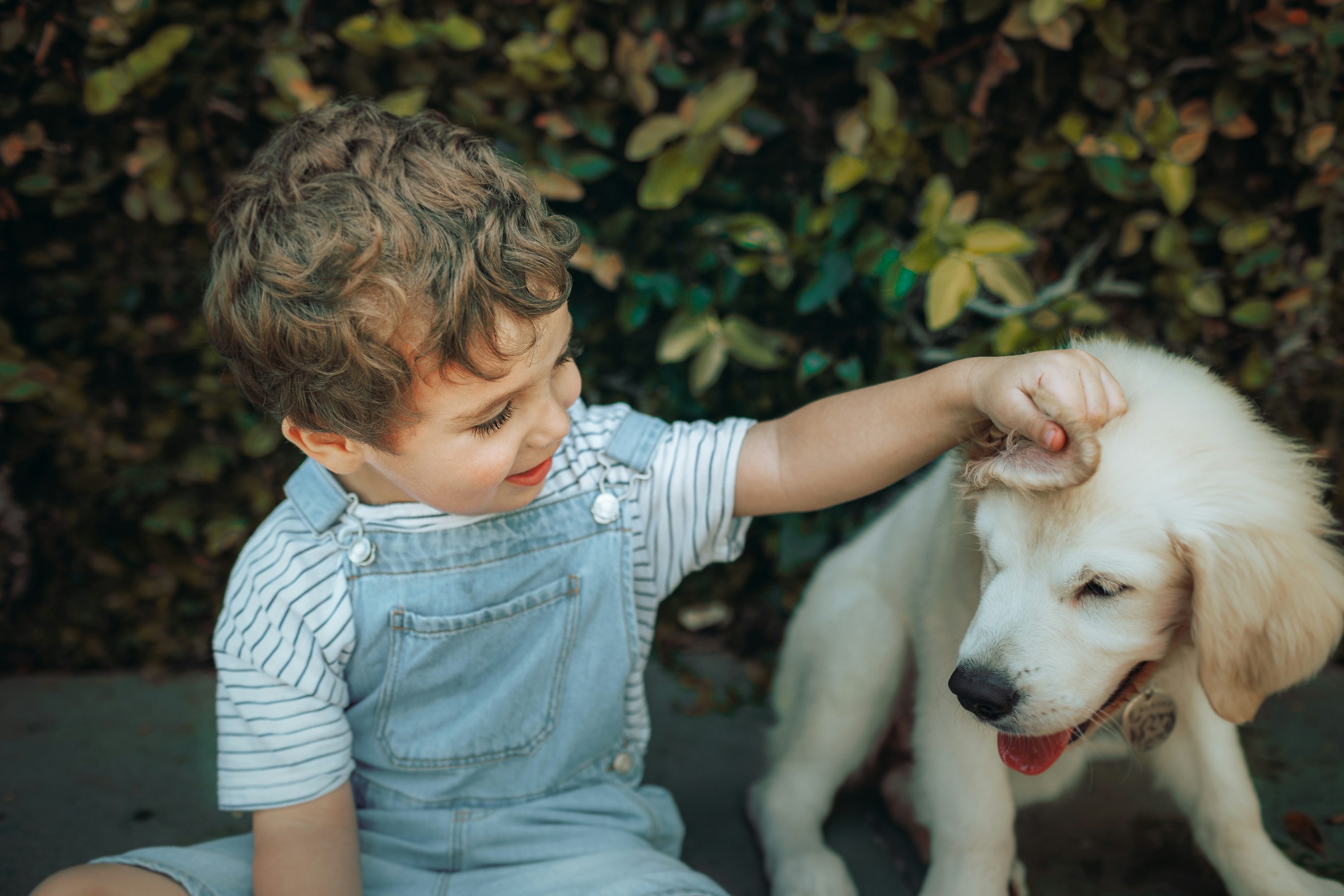
Why this conversation carries so much weight
It is not a rare event. Roughly 63% of children experience the death of a pet within the first seven years of life, according to research summarized by veterinary and family-health institutions. For a large share of them, it is the first grief they will ever feel.
It also leaves a mark. A 2020 study from Harvard Medical School and Massachusetts General Hospital, published in European Child & Adolescent Psychiatry, found that the death of a pet can be associated with measurable psychological distress in children — symptoms that, for some, persisted for three years or more. The takeaway is not that pet loss damages children. It is that their grief is real grief, deserving of the same honesty and care we would give any other loss.
That honesty has to be calibrated to what a child can actually understand — and that changes dramatically with age.
The one rule that matters most: don't say "put to sleep"
Across pediatric, psychological, and veterinary guidance, one piece of advice is nearly unanimous: avoid soft euphemisms. "Put to sleep," "went away," "we lost her," and "gone to a better place" all feel gentler to the adult saying them. To a young child, they are landmines.
- "Put to sleep" can make a child afraid of sleep itself — or terrified that a parent who naps may not wake. Pediatric counselors report children developing genuine bedtime anxiety from this exact phrase.
- "Went away" or "lost" implies the dog could come back, or was misplaced, and that someone simply failed to find him.
- Vague spiritual language, before a child can hold abstraction, often produces more confusion than comfort.
The clearest language is also the kindest: the dog's body stopped working and cannot be fixed. Children can hold that. What they cannot hold is a contradiction they'll later feel was a lie — and the erosion of trust that follows when they discover it.
Euphemisms feel softer to the adult saying them. To a child, "put to sleep" can turn bedtime itself into something to fear.
An age-by-age guide to explaining a dog's death
Children build their understanding of death in stages. Below age six, most see it as temporary and reversible — like a cartoon character who stands back up. Between six and eight, the permanence begins to register. By around nine, most children grasp that death is final, universal, and irreversible. Your words should meet them where they are.
| Age | What they understand | How to say it |
|---|---|---|
| **3–5** | Death seems temporary; they may "play" the dog back to life and ask repeatedly when he's coming home | Concrete, physical, repeated patiently |
| **6–9** | Permanence is dawning, but grief arrives in waves — fine at dinner, sobbing at bedtime | Honest and specific; name what happens next |
| **10–13** | Clear grasp of finality; want the medical and practical details | Treat them as a participant; invite questions |
| **Teens** | Adult understanding, but may mask pain or grieve privately | Respect their privacy; don't force a script |
Ages 3 to 5: be concrete and expect repetition
A preschooler does not yet believe death is forever, so be ready to answer the same question — "When is Buddy coming back?" — many times without frustration. Repetition is how they process, not a sign you explained it wrong.
Try: "Buddy's body was very old and very sick, and it stopped working. When a body stops working all the way, it can't start again, and that's called dying. Buddy died. He isn't hurting anymore, and it's not because of anything you did."
Keep it physical and avoid abstractions. Reassure them, explicitly, that the dog felt no pain and that the child is safe — young children often quietly wonder whether they're next.
Ages 6 to 9: name what happens next
Early-elementary children are starting to understand permanence, but the emotion lands unevenly. A child may seem unbothered for hours, then fall apart at bedtime when the dog's absence is loudest. This is normal; it is grief in waves, not denial.
Be direct, then give them a map of what comes next: "I have something very sad to tell you. Daisy died this morning. Her body stopped working and she can't breathe or feel anything now. I wish it weren't true. Tonight, we're going to look at our favorite photos of her and say goodbye in a way that feels right for our family." The promise of a next step gives a frightened child something to hold.
Ages 10 to 13: tell them the truth they're already guessing
Tweens usually understand death plainly and will sense evasion immediately. They often want the real details: what was wrong, what the vet did, what euthanasia actually means and why it was a kindness. Answer honestly and without flinching. If the decision was to euthanize, explaining the reasoning — that it was chosen to end suffering, not to give up — helps a child this age trust both you and their own future judgment.
Teenagers: respect the privacy of their grief
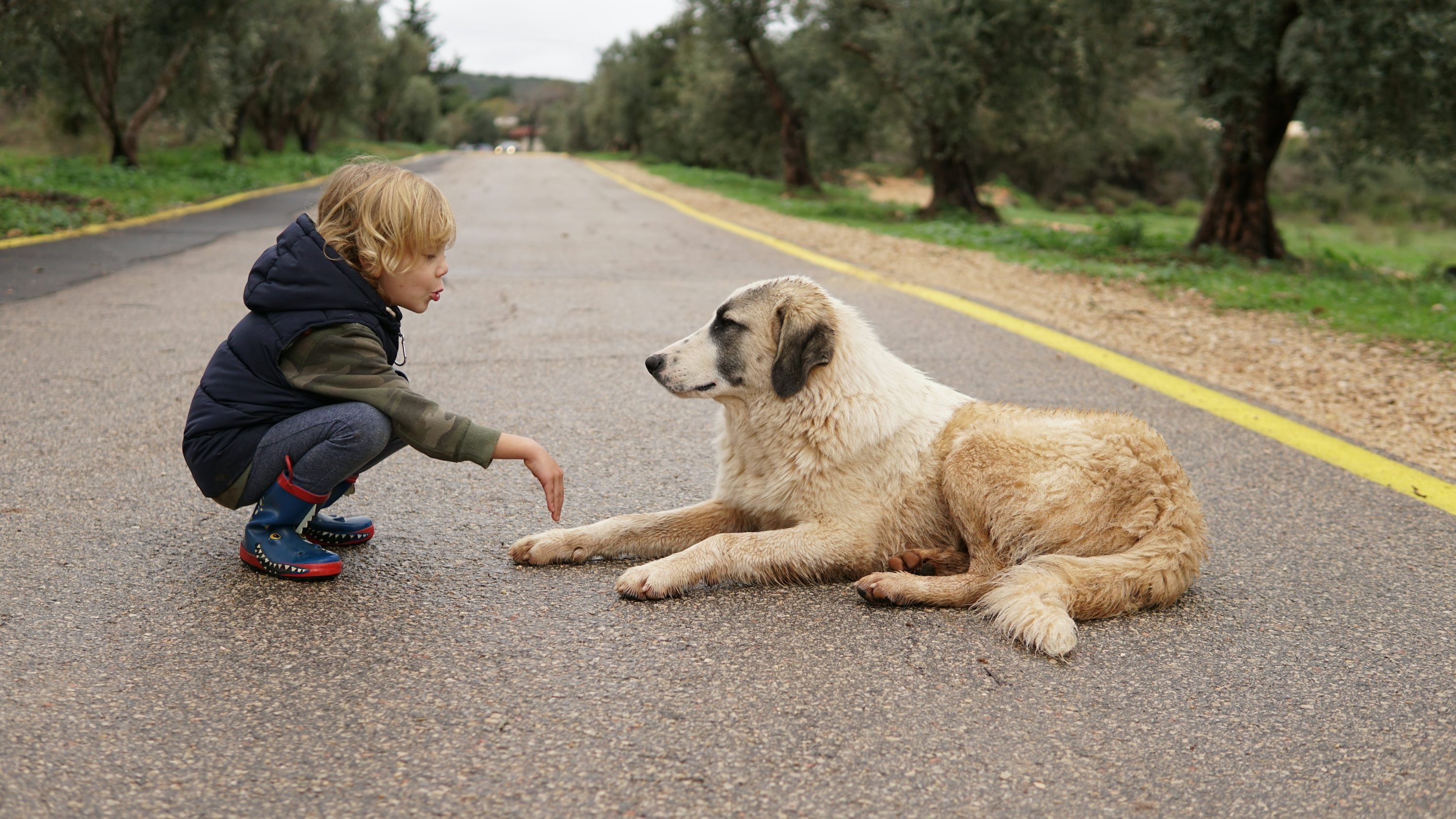
Teens have an adult understanding of death but may grieve in ways that look like indifference — retreating to their room, going quiet, leaning on friends instead of family. Don't mistake composure for not caring. Make it clear you're available, share your own sadness honestly so they know grief is allowed, and resist forcing a conversation on your timeline. A teen who is left room often returns to talk when they're ready.
The five honest sentences
If you remember nothing else, these five plain statements answer the questions nearly every grieving child is silently asking. Say them in your own words.
- What happened: "Our dog died today."
- What "died" means: "His body stopped working, and it can't be fixed or started again."
- It doesn't hurt: "He isn't in any pain now."
- It's not your fault: "Nothing you did or didn't do made this happen."
- You are safe and loved: "I'm so sad too, and we're going to get through this together."
What not to say (a quick checklist)
- ❌ "Put to sleep" / "went to sleep"
- ❌ "We lost him" / "he went away"
- ❌ "God needed another angel" (before a child can hold abstraction)
- ❌ "Don't cry" or "be brave"
- ❌ "We'll get a new one this weekend" — replacement is not repair, and rushing it teaches children that grief is something to paper over
Should a child say goodbye — or be there for euthanasia?
Most child-bereavement specialists agree children should be given the chance to say goodbye, in an age-appropriate form. Being present for euthanasia, or seeing the body afterward, can be appropriate for older children who understand what they'll see and choose it for themselves — never as an obligation. Prepare them honestly for what the moment will look like.
If seeing the dog isn't possible, create another goodbye that still feels real: holding the collar, lighting a candle, looking through photos together, or writing a short letter. A concrete ritual gives shapeless grief somewhere to go.
Give them a role: how memory-keeping helps children grieve
The single most useful thing you can offer a grieving child is agency — a job in honoring the dog rather than a front-row seat to adult sadness they can't influence. Children who participate in remembering tend to move through grief more steadily than children who are protected from it.
Concrete, child-sized roles:
- Let them choose the photo that gets framed for the mantel.
- Have them draw the dog or dictate a favorite memory for a keepsake book.
- Let them pick the tribute line for a candle, or the spot where a small figurine will sit.
- Invite them to plant something or place a stone in the yard.
These rituals do quiet, lasting work. They convert an absence the child cannot change into an object they helped make — proof that love continues in a form they can see and touch. (This is the instinct behind keepsake tributes like the heirloom commissions families create at Pet Moment: a framed portrait, a memory book, a candle, a small figurine — pieces a child can keep at the bedside and return to long after the first hard week.) Whatever form it takes, the principle holds: a child who helps build the memorial is a child who learns that grief can be made into something tender rather than only endured.
When a child's grief needs more help
Most children adjust within weeks when given honesty and room. Reach out to a pediatrician, school counselor, or child therapist if, well beyond the early weeks, you see:
- Persistent sleep disruption, nightmares, or new separation anxiety
- Withdrawal from friends, school, or activities they loved
- Regression — bed-wetting, clinginess, or speech that had resolved
- Ongoing guilt or a belief that they caused the death
- Talk of wanting to die to "be with" the pet
These are signs a child needs more support than a single conversation can give, not signs you failed.
The thing worth remembering
A dog's death is often the first time a child learns that something they love can be gone and that they can survive it. Tell the truth, in words small enough to hold. Let them cry on their own schedule. Give them a job in saying goodbye. Done with honesty and patience, this hardest of conversations becomes one of the most important gifts you'll ever give them — the knowledge that grief is the price of love, and that it can be carried.
Sources
- Death of Pets: Talking to Children — American Academy of Child & Adolescent Psychiatry
- How to Explain a Pet's Death to Children — American Kennel Club
- When a Pet Dies: Helping Kids Cope — Nemours KidsHealth
- Talking with Preschoolers About the Death of a Pet — PBS KIDS for Parents
- Helping Children Understand Pet Loss — UC Davis School of Veterinary Medicine
- Losing a pet can affect children's mental health, study finds — The Harvard Gazette
- The mental health effects of pet death during childhood — European Child & Adolescent Psychiatry (PMC)
- An Age-by-Age Guide to Explaining the Death of a Pet to Children — FamilyEducation
- 6 tips for handling pet loss with children — UCLA Health