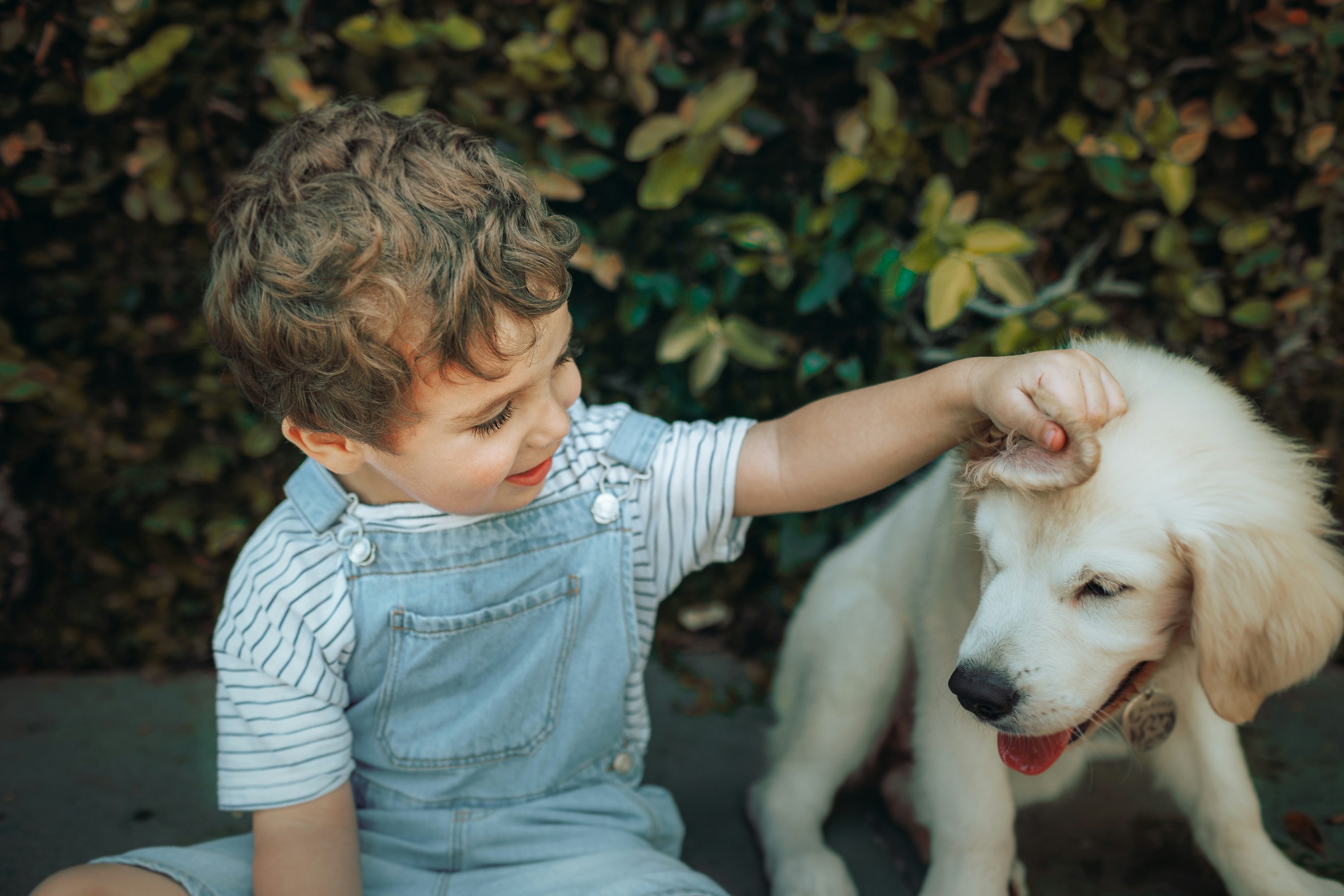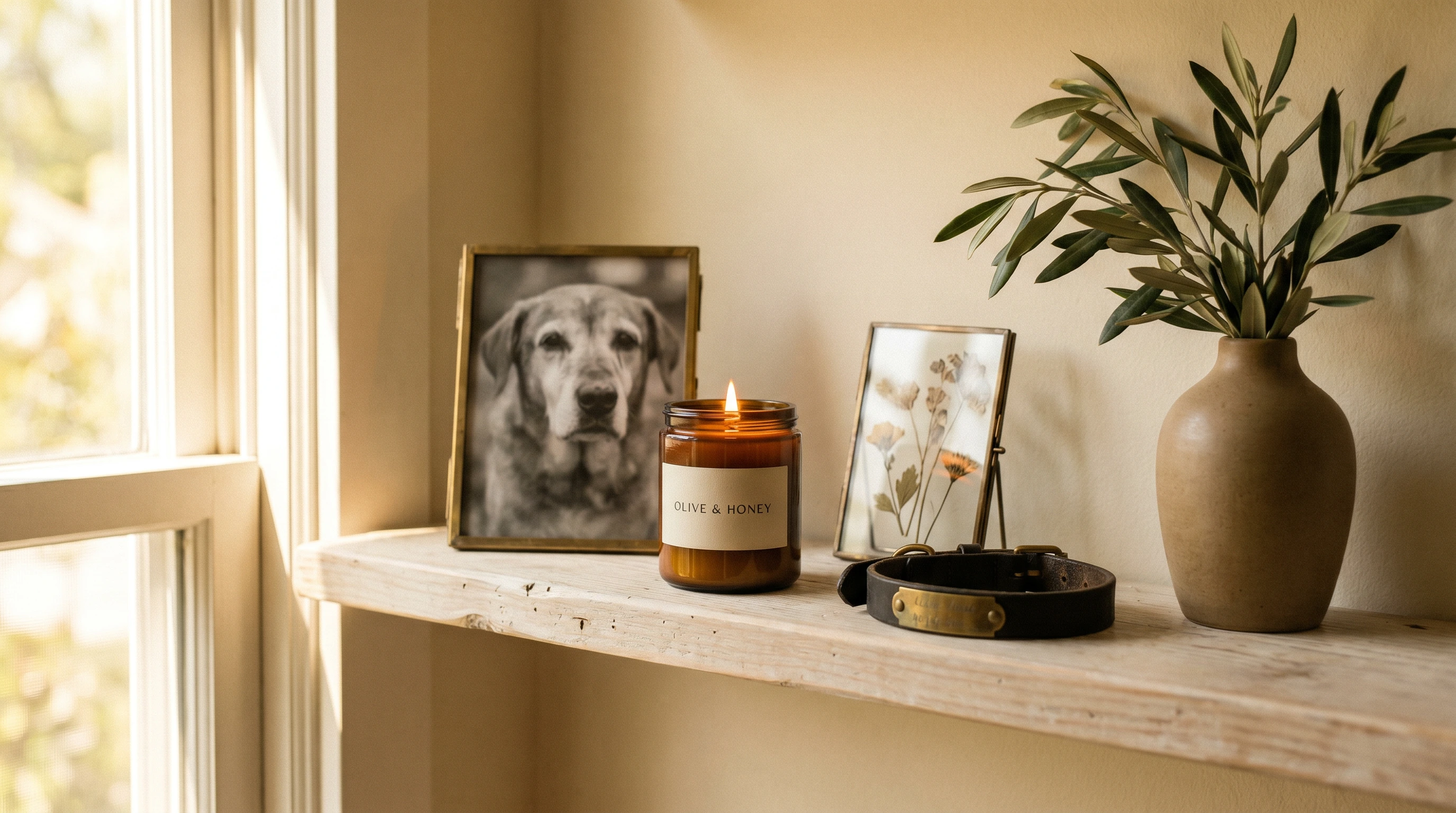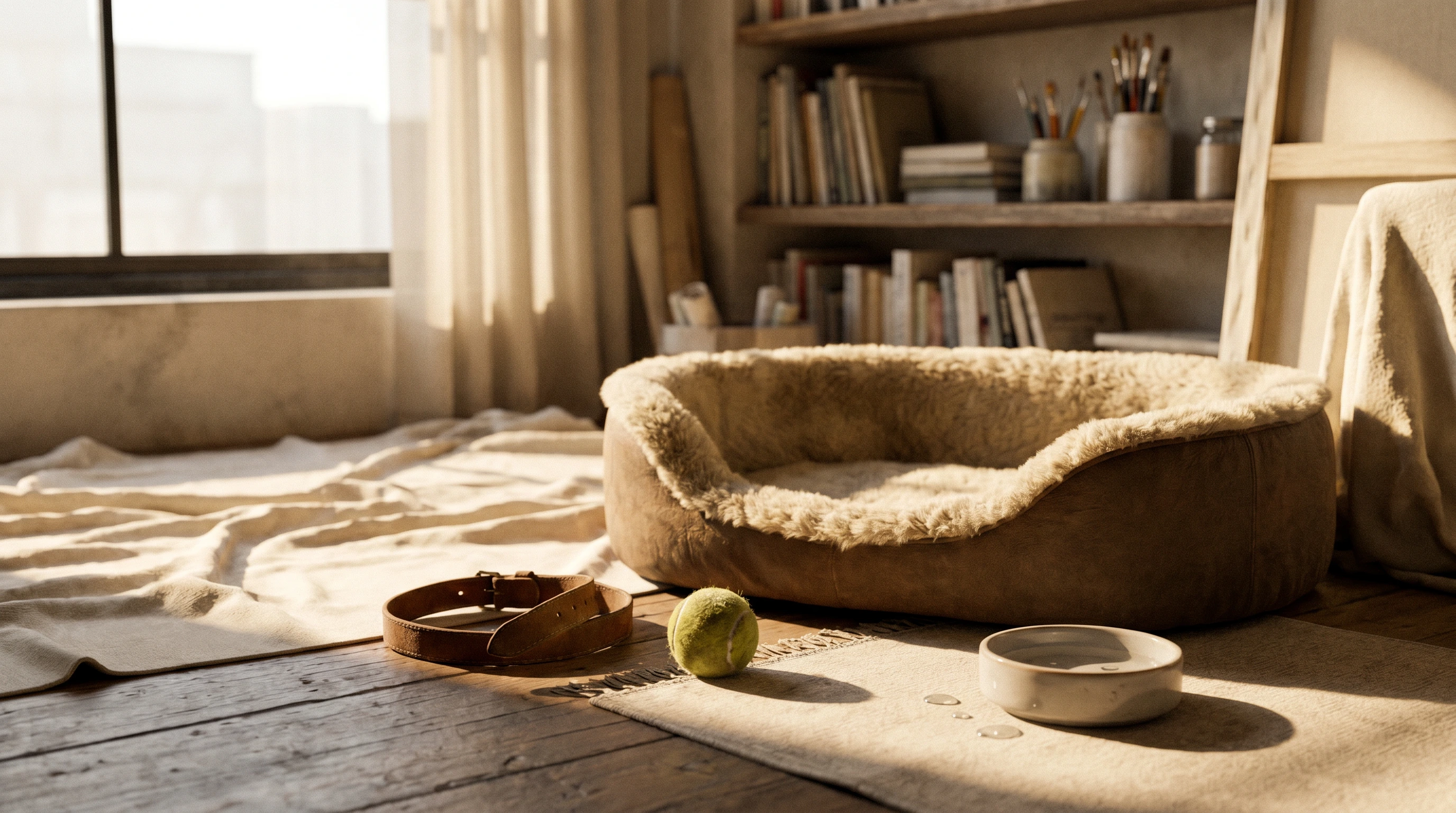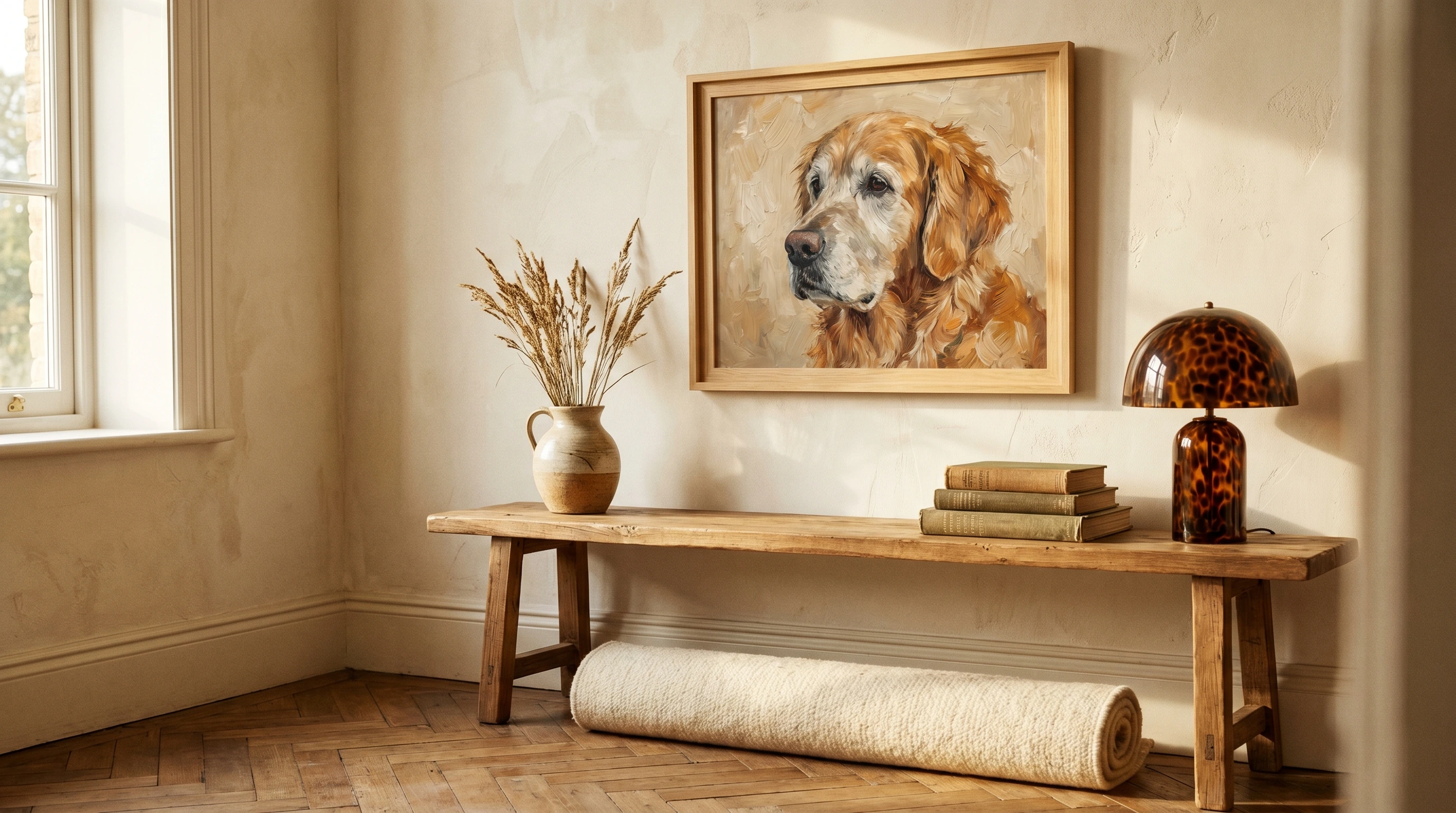
A painting on a wall, twenty years later, is still telling your grandchildren who you loved.
There is a house on a hill in Connecticut where, in the front hallway, above a small mahogany table, hangs an oil portrait of a brown spaniel named Beau. Beau died in 1962. The painting was commissioned by the woman who loved him, who died herself in 1991. The house has changed hands twice since then. Beau is still in the hallway. The current owners do not know who he was. They know only that he came with the house, and that he belongs there, and that they cannot bring themselves to take him down.
That is what an heirloom is.
It is an object that outlives the reason it was made. It moves through the family — or through the house, or through whoever inherits the wall — and it carries something forward that nobody can quite name. The original grief is gone. The original joy is gone. The painting is still there.
This is a piece about why some families, having lost a dog, commission a painting instead of printing a photograph. It is also about what the word heirloom means in a year — 2026 — when most of what we make does not last.
What an heirloom actually is
The word has been overused. Every catalog now sells "heirloom-quality" things — wooden cutting boards, leather wallets, ceramic mugs. Most of them are not heirlooms. They are well-made objects that will last twenty or thirty years and then be thrown out.
A real heirloom has three qualities. It outlives the person who commissioned it. It is specific — it belongs to a particular family or a particular history, not to a generic category. And it has been made by hand, by someone who cared, with materials that don't fall apart.
A phone screensaver of your dog is not an heirloom. It will be gone the next time the phone updates and your iCloud bill lapses. A printed photograph in a drugstore frame is closer — it might last twenty years on a wall before the print fades. An oil painting on prepared canvas, hand-finished, varnished, framed — that is in a different category. Properly cared for, it will easily reach a hundred years. Most of the dog portraits in museum collections are over two hundred years old. They look exactly as they did the day they were painted.
This is not a marketing claim. It is a fact about pigment and linen. Oil paint, once it cures, is one of the most stable materials humans have ever made.
A brief history of pet portraiture
People did not start commissioning paintings of their dogs in the last twenty years. The practice is hundreds of years old. In 17th-century Netherlands and 18th-century England, landed families would hire the same court painters who did the portraits of their wives and children to do the family dogs. Sometimes the dogs were in the family portraits — at the feet of the heir, on the lap of the lady of the house. Sometimes the dogs got their own. Stubbs painted dogs. Gainsborough painted dogs. Landseer made an entire career out of it.
This was not sentimental. Or it was sentimental in the way every great portrait is — because the family loved the subject and wanted the subject to be on the wall forever. Dogs were on the walls of those houses for the same reason wives and sons were on the walls. They were part of the family.
What has changed is who gets to do this. For most of history, a commissioned portrait — of a person or a dog — was for the very rich. Today the cost is more reasonable than people expect. The practice that was once limited to the manor house is now done in small studios, for ordinary families, for the same reason it was ever done. Because the dog mattered, and because you want the dog on the wall.
What hand-finished means in 2026
There has been a lot of confusion in the last few years about how things are made. So this part is worth being clear about.
A hand-finished painting is one where a painter, a person, has put pigment on canvas with a brush over a period of time. The painter looks at the photograph of your dog. The painter mixes colors. The painter makes decisions — about the angle of the head, the catchlight in the eye, the softness of the edges, the warmth of the background. Each painting takes weeks. The painter has hands that get tired and a back that hurts at the end of the day. A designer reviews the work before it ships. If something isn't right, it goes back to the painter. Nothing leaves the studio that the painter and the designer have not signed off on.
This is the model that has worked for four hundred years. The technology of paint, brush, canvas, and a human eye does not need to be reinvented.
Things that are not hand-finished paintings: prints, photo prints with a filter, posters, canvas-wrapped prints from a chain store. These are useful objects. They are not paintings. They will not last a hundred years. They are not what we are talking about here.
If you commission a painting from a studio and you are unsure whether what you are getting is hand-finished, ask. A real studio will tell you exactly who painted it and what materials they used. A real studio will be proud to.
What outlasts what
The honest table.
Digital files — the photographs on your phone, the JPEGs in your iCloud — have a useful life that depends entirely on companies you do not control. iCloud accounts get closed. Phones get lost. File formats become unreadable. The first generation of digital family photos, from the late 1990s, is already partially lost. Most people cannot find photos from 2003.
Printed photographs from a drugstore fade noticeably in twenty to forty years, depending on the light they hang in. The colors shift. The blacks go brown. The image is still there but the dog in it stops looking quite like the dog you knew. Museum-grade archival prints last longer — sixty, eighty years — but they are expensive and require specific care.
Oils on prepared canvas, varnished and framed properly, will reach a hundred years easily. Two hundred is normal. The Rijksmuseum in Amsterdam is full of three-hundred-year-old paintings of dogs that look like the dogs were painted last week.
That is the actual reason some families commission a portrait. Not because it is fancier than a print. Because they want the dog to still be on the wall when their grandchildren are grown.
Why a painting reads differently than a photograph
A photograph fixes a moment. The shutter opens for a fraction of a second, light hits the sensor, the moment is preserved exactly. That is the great virtue of photography — it is honest. It shows what was there.
A painting fixes a presence. The painter has spent hours looking at the dog. The painter has noticed the things you noticed — the set of his ears, the particular kindness of his eyes, the way the white on his muzzle is more on one side than the other. The painter has put that into the brushwork. The painting is not a record of a moment. It is a record of who he was.
This is why, when people stand in front of a good portrait, they say "that's him." Not "that's a great photo." They say that's him. They mean: the painter saw what I saw.
A photograph can do this too, occasionally. The one perfect photo, taken in the right light, that catches him. But most photographs do not. Most photographs are quick and slightly wrong — his head at a strange angle, the light too flat, the eyes not quite. A painting starts from the photograph and corrects toward the truth of him.
A note on the studio that publishes this journal
This journal is published by Pet Moment Atelier, a small studio that makes hand-finished tribute portraits. We work from a single photograph. The painter spends a few weeks on each piece. A designer reviews each painting before it ships. The painting arrives framed, ready to hang.
We do not list specs or pricing here. The journal is not for that. If you want to know how it works, the link is at the bottom of this page and it is one click. If you don't, that is fine too. The journal exists because the people we hear from — every week, in long emails — are looking for something to read at 11 p.m. that does not feel like marketing. We try to write that.
Some of those people, eventually, commission a painting. Some don't. Both are fine. The journal is here either way.
What to think about before commissioning anything
A few honest things to consider, regardless of where you commission it from.
You only need one photograph. People worry about this. One clear photograph of his face is enough for almost any good painter to work from.
The painting will not be ready quickly. Real paintings take weeks. If a studio promises you a hand-finished oil in three days, it is not a hand-finished oil. Ask how long. Ask who is painting it. Ask if you can see the painter's other work.
You can commission a painting while he is still here, or after. Most studios do both. There is no right time. Some families want to see the painting on the wall while he is still alive — others find that too hard. Either is okay.
The painting will go on a wall. Think about which wall, before you order. The light, the height, the room. A good painting in a hallway you never walk through is a sad thing. Hang him where you live — over the table where you read, in the living room where you sit in the evenings. He should be seen.
The last thing
There is no urgency about this. He is not going anywhere if he is still here. He is not coming back if he is not. A painting is one of the things you can do, slowly, in your own time. It is not the only thing. It is not the most important thing. It is a thing some families do.
If you are considering it, (here is how it works in our studio). One photograph, a few weeks, a painting on the wall.
If you are not — if you are doing the photographs, or the bench, or the tree, or the letter — (the other options are here), and any of them are enough.
But this is the case for a painting, as plainly as we know how to make it: a printed photograph fades. A digital file disappears. A painting on a wall, twenty years later, is still telling your grandchildren who you loved.